Wooden Gates
Timber suits a cottage frontage or a rural boundary better than anything else. Six designs, Carlton, Drayton, Evington, Hampton, Quorn and Windsor, as single gates and matched driveway pairs in heights from 900mm to 1800mm, priced from £138.60 to £1,324.80 including VAT, in softwood for painting or hardwood for oiling.
Hardwood pairs are heavy, so hinges, posts and any automation want choosing to suit. Pick up fittings and latches here, or read our wooden gates and garden gates pages. We fit everything we sell and make to measure where nothing fits. Also in the shop: wrought iron and aluminium gates.
Showing all 4 results
-
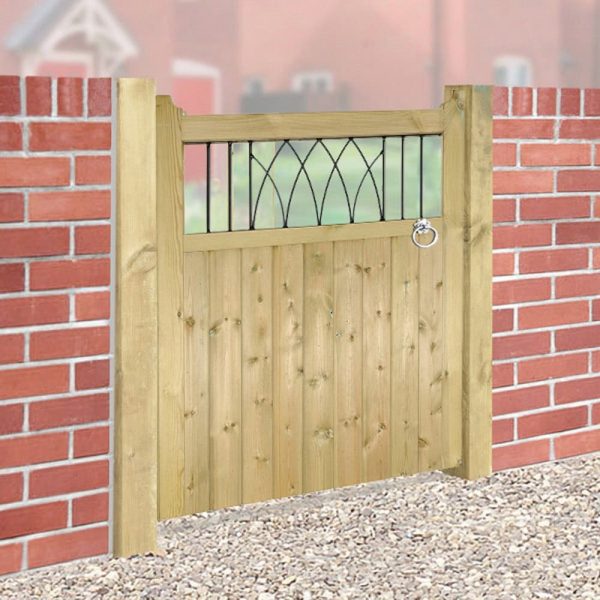 Burbage Iron Craft
Windsor Single Timber Gate – 1200mm High
From £268.20 Options This product has multiple variants. The options may be chosen on the product page -
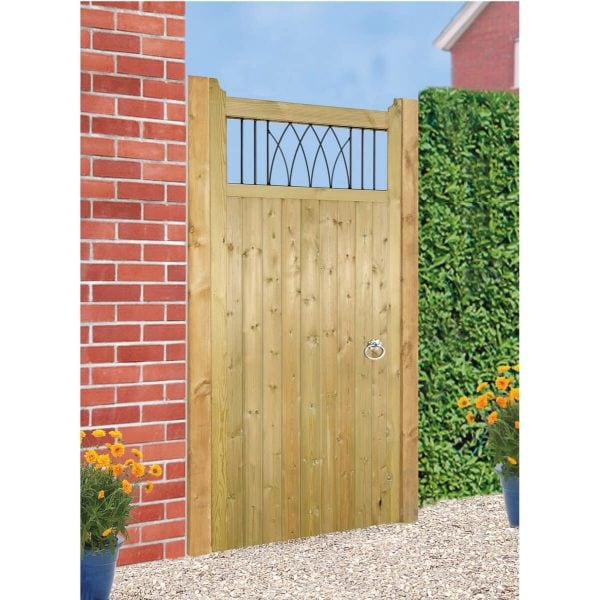 Burbage Iron Craft
Windsor Single Timber Gate – 1800mm High
From £360.00 Options This product has multiple variants. The options may be chosen on the product page -
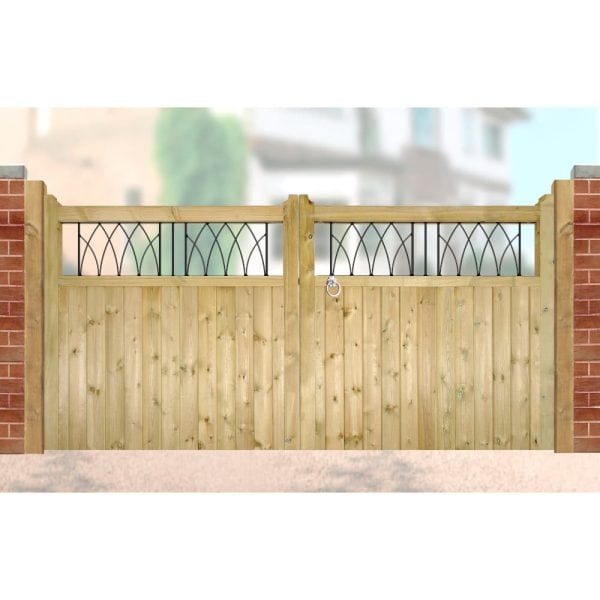 Burbage Iron Craft
Windsor Timber Driveway Gate – 1200mm High
From £799.20 Options This product has multiple variants. The options may be chosen on the product page -
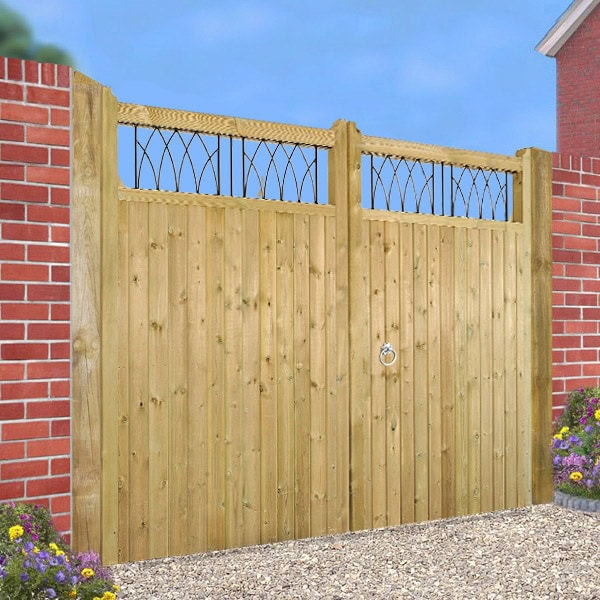 Burbage Iron Craft
Windsor Timber Driveway Gate – 1800mm High
From £1,017.00 Options This product has multiple variants. The options may be chosen on the product page
Do wooden gates need treating?
Yes, and this is the honest difference between timber and metal. The gates arrive treated with a preserver, but that is not a decay guarantee, and keeping the finish up is down to you from then on. A coat of preserver or stain every couple of years, and keeping the bottom rail clear of soil and wet leaves, is what decides whether a gate lasts five years or twenty. Wrought iron and aluminium ask a lot less of you.
What sizes do they come in?
Heights run from 900mm through 1200mm to 1800mm depending on the design, as single gates and as matched driveway pairs. One thing worth knowing before you measure: timber moves, so all gate sizes are subject to slight variation from normal shrinkage and expansion, and the fit should allow for it. If nothing here suits your opening, we make gates to measure, and a free site survey will settle the sizes.
Which design should I choose?
Six to choose from: Carlton, Drayton, Evington, Hampton, Quorn and Windsor. They differ mainly in the infill and the top profile, from close-boarded privacy through to open designs with metal infill panels, so the practical question is usually how much you want to screen the frontage. There are finished examples in our recent work, and more background on our wooden gates and garden gates pages.
How much do wooden gates cost?
From £115.50 for a single garden gate to £847.50 for a tall driveway pair, including VAT. Height and width drive most of the difference, and a pair is not far off twice a single. Fittings are sold separately, so allow for hinges and a latch on top. For an opening that is not a standard width, made to measure is quoted individually, so send us the measurements or read about bespoke gate design.
What fittings do I need?
A single gate needs a hinge set and a latch. A driveway pair needs the same plus a drop bolt to hold one leaf while the other swings. Our gate and fence accessories range carries timber gate fitting sets in 18 inch and 24 inch sizes, in hook and band or T-hinge form, and in black or galvanised finish, so you can match them to the gate rather than guess at a builders’ merchant.
Can wooden gates be automated?
Yes, but weight matters more here than with any other material. A tall timber driveway pair is heavy, and it gets heavier in the wet, so the posts, hinges and motor all need specifying for the real load rather than the catalogue one. It is much cheaper to plan for it now than to retrofit. Start with swing gate automation and read gate safety and the regulations, then let us look at the opening.
Can you fit them?
Yes, and with a heavy timber pair it is the part worth paying for. Posts have to be set deep and true, because a wooden gate that is hung slightly out will bind within a season once the timber takes up moisture. We fit everything we sell across Shropshire and the surrounding counties, and we service and repair gates we did not supply, including rehanging ones that have dropped.
Timber or metal?
Timber suits a cottage, a period frontage or a rural boundary, and nothing else looks quite like it. The trade is upkeep. Wrought iron gives you hand-forged detail and needs occasional attention, and aluminium asks for almost nothing but will not pass for wood up close. All three are covered across our gates and railings pages, and we will give you an honest opinion on site rather than talk you into the dearest option.
Do I need planning permission?
In most cases no. Gates under 1 metre high adjacent to a highway, or under 2 metres elsewhere, usually fall within permitted development. Listed buildings, conservation areas and properties with permitted development rights removed are the exceptions, and a 1800mm pair on a roadside boundary is the case most likely to need checking. Your local authority will confirm it, and there is more in our general FAQs.
What timber are the gates made from?
Scandinavian Redwood, responsibly sourced from managed forests, smooth planed rather than sawn. Several designs combine the timber with metal infill panels, which gives you the look of a solid gate with a lighter frame. Each product page lists what that particular gate uses. If you want the appearance of timber without the upkeep, it is worth comparing against aluminium gates before you decide.
How long does delivery take?
Much of the range is made to order rather than held in stock. The Windsor range, for example, quotes up to three weeks for a single gate and three to four weeks for a driveway pair, and the other designs vary, so check the product page for the one you want. Sizes do occasionally come available sooner, so it is worth calling us if you are working to a deadline rather than assuming the quoted time.